inquiry
Leave Your Message
0%

Picking the right supplier for Aluminum Profiles for Sliding Doors isn’t just about comparing prices in a catalog—there’s a lot more to consider. These profiles need to hold up under real-world conditions—think regular movement, weather fluctuations, and the kind of daily wear and tear they’ll face. A trustworthy supplier should be upfront, explaining things like alloy grades, wall thickness, thermal-break designs, surface treatments, and manufacturing tolerances—without hiding behind vague buzzwords or empty promises.

Dr. Stephen Selkowitz, a well-respected expert in building envelopes, once said, “Windows are the most dynamic part of the building envelope.” That really rings true for sliding doors too. Sure, a door might look sleek and elegant in a showroom, but if it’s subjected to heavy glass panels or coastal air, it might not perform so well. When we looked into different brands like Schüco, Reynaers Aluminium, AluK, and Hydro, we found they all have options suitable for high-end projects—still, the quality of the final product really depends on how it’s made, installed, and maintained locally.

Details make a big difference. For example, when you’re eyeing slim profile aluminum sliding doors, it’s worth checking out things like roller capacity, drainage systems, corner strength, gasket durability, and whether replacement parts are easy to get. Be sure to ask for test reports on things like air tightness, water resistance, wind load, and thermal performance. And always inspect samples in good lighting—uneven anodizing or finish flaws tend to be more obvious then. Some suppliers also share CAD files, cutting lists, or offer technical training—these extras can really help cut down mistakes in your workshop.

That said, no one’s perfect. Sometimes the marketing talk can be a lot stronger than what the product actually delivers in real-world use. So, a smart comparison involves hearing from installers, looking into warranty service, checking lead times, and reviewing project references. The best supplier for Aluminum Profiles for Sliding Doors isn’t necessarily the biggest or most well-known—it’s the one that stands behind what it claims, admits when there are limitations, and stays consistently supportive after everything’s installed.

Top China Aluminum Profiles For Sliding Doors Suppliers?

What Are Aluminum Profiles for Sliding Doors?

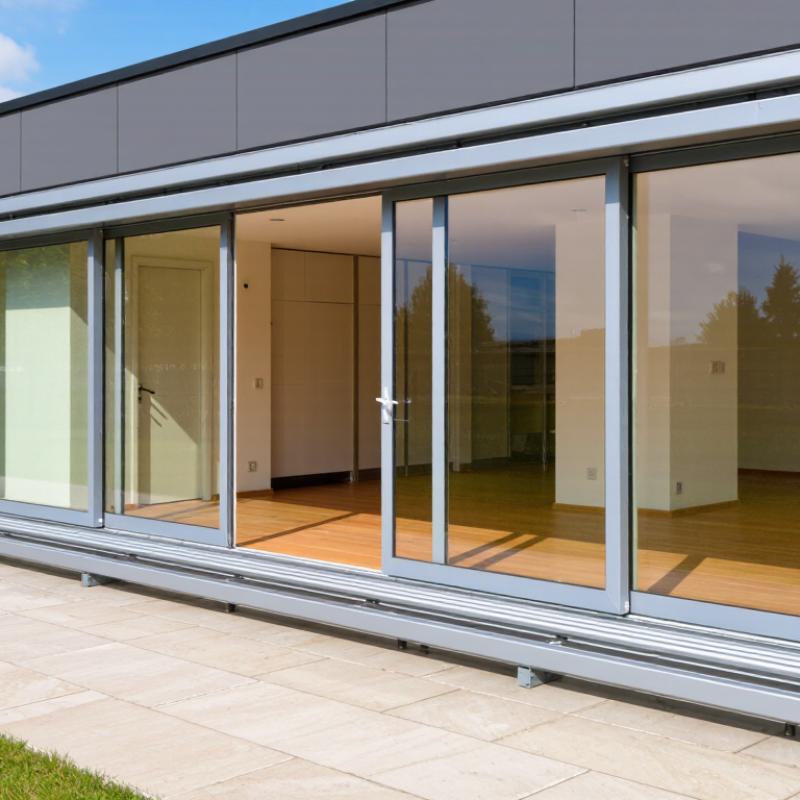
Aluminum profiles for sliding doors are shaped extrusions that form the frame, sash, track, and meeting stile. They are usually made from corrosion-resistant aluminum alloys, then finished with anodizing or powder coating. The profile’s internal cavities can hold rollers, locking parts, drainage paths, and rubber seals. This structure keeps the door light while supporting large glass panels.

A reliable supplier should explain alloy grade, wall thickness, dimensional tolerance, and surface treatment clearly. Ask for section drawings and test data before ordering. In Profile Windows And Doors projects, the track must stay straight and level; even a small deviation can cause difficult movement.

Good suppliers also check compatibility with rollers, handles, gaskets, and glass thickness. Thermal-break profiles may improve indoor comfort, especially where outdoor temperatures change sharply. Yet they can increase cost and require more careful assembly.

Real installation experience matters. I have seen attractive profiles fail because drainage openings were too small or poorly positioned. That detail is easy to overlook. Suppliers should provide cutting guidance, corner-joint methods, sample sections, and replacement support. Finish quality deserves close inspection under direct light, where scratches and uneven coating become visible. A lower price may reflect thinner walls, weaker hardware channels, or inconsistent extrusion tolerances. These differences often appear only after repeated opening and closing.

Why Choose Chinese Suppliers for Sliding Door Profiles?

Top China Aluminum Profiles For Sliding Doors Suppliers?

Why Choose Chinese Suppliers for Sliding Door Profiles?

Chinese suppliers are widely considered for sliding door profiles because they combine production scale with flexible customization. Many manufacturers operate extrusion lines, cutting equipment, and surface treatment facilities in one location. This can reduce coordination between separate factories and shorten sample development. A supplier may produce profiles for narrow residential doors, large patio systems, or commercial partitions.

The practical advantage is customization. Buyers can specify alloy grades, wall thickness, groove sizes, thermal breaks, and finish colors. A reliable factory should provide technical drawings, tolerance data, material reports, and coating test results. Request physical samples before approving mass production. Check whether the profile fits your rollers, tracks, seals, and handles. Small dimensional errors can cause visible gaps or difficult movement.

Cost matters, but it should not lead the decision. Lower aluminum prices may reflect thinner walls, weaker packaging, or inconsistent finishing. No supplier is perfect. Even experienced factories can misunderstand a drawing or delay a mold revision. Clear specifications, video inspections, and staged quality checks reduce these risks. Ask about moisture protection during shipping, export packaging, and replacement procedures for damaged goods. A careful supplier will discuss limitations openly, not promise everything. This honesty is easy to overlook, yet it often reveals stronger professional practice.

Key Types of Aluminum Profiles for Sliding Door Systems

Choosing reliable Aluminium Sliding Door Profiles starts with understanding each part of the system. The outer frame carries the door’s weight and connects securely with the wall opening. It needs accurate dimensions, stable alloy, and a suitable surface finish. Small errors here can cause visible gaps and difficult installation.

The sliding sash holds the glass panel and moves along the track. Slim sash profiles create a cleaner view, while reinforced sections support larger, heavier glass. Interlocking profiles meet at the closing point and reduce air movement, dust, and noise. For better insulation, thermal-break profiles use a polyamide barrier between the inner and outer aluminium sections. This design limits heat transfer through the frame.

The track profile deserves careful attention. A stainless-steel or reinforced aluminium running surface can reduce wheel wear and rolling noise. A low threshold improves access, but it may require better drainage planning during installation. Glazing beads secure the glass and should match the selected gasket system. Suppliers should provide section drawings, alloy specifications, load information, and test records before production.

In practical projects, profile appearance often receives too much attention. Track alignment matters more. Even premium-looking sections may perform poorly when corners are weak or drainage holes are misplaced. I have found that sample assembly reveals problems earlier than catalog review. Slightly thicker profiles can sometimes improve durability, although they may reduce the visible glass area.

How to Evaluate China-Based Aluminum Profile Suppliers

China remains a major sourcing base for sliding-door aluminum profiles. International Aluminium Institute data shows China produced about 41.6 million tonnes of primary aluminum in 2023, nearly 59% of global output. Scale alone proves little. Supplier evaluation must begin with process control.

Request alloy certificates, extrusion tolerances, and recent inspection records. For common 6063 profiles, verify hardness, wall thickness, and straightness against your drawing. Ask to inspect the die workshop, aging ovens, anodizing tanks, and packaging area. Small details matter. A clean rack and separated profiles can prevent scratches before shipment. ISO 9001 certification helps, but audited production records provide stronger evidence. Sample testing should include coating thickness, color consistency, corner fit, and load performance. Use recognized methods, such as ISO 7599 for anodized aluminum and ASTM B221 for extruded products.

Pricing needs careful interpretation. World Bank Pink Sheet data placed average primary aluminum prices near 2,256 dollars per metric ton in 2023. A supplier offering a much lower quote may be using thinner walls, weaker alloy control, or unclear coating specifications. Compare quotations line by line, including tooling, inspection, packing, and replacement terms. Check export experience through verifiable documents, not polished presentations. Video calls help, though they cannot replace an independent inspection. I would also order a small pilot batch first. It may slow procurement, but it exposes fit and finish problems early. I have learned that even a technically capable supplier can fail through rushed packaging or vague drawings. That weakness deserves honest review.

Important Quality Standards and Customization Options

For buyers comparing Aluminum Door Profile Sliding suppliers in China, quality begins with verified extrusion data, not polished catalog photos. EN 755-2 defines mechanical properties, while EN 12020 addresses dimensional tolerances for precision aluminium profiles. ASTM B221 is also widely used for extruded aluminium products. Ask for current mill certificates, alloy details, wall-thickness readings, and inspection records from each production batch.

Customization should match the door’s actual operating conditions. Suppliers can adjust profile depth, thermal-break width, drainage channels, gasket grooves, and roller clearances. A heavier frame is not automatically better. Poorly matched rollers may create noise, wear, and difficult movement within months. Coating requirements also matter. Specify anodizing thickness or powder-coating performance, then request salt-spray and adhesion results. The exact test method should be documented.

Energy and sustainability deserve measurable attention. The International Aluminium Institute reports that recycled aluminium uses about 5% of the energy required for primary aluminium, representing roughly 95% savings. This supports recycled-content requests, but traceability remains imperfect. Ask for recycled-content declarations and production-energy information. A 2024 industry report may not reflect every factory’s current process. That is worth checking. Experienced purchasers should also test full-size samples, corner joints, water drainage, and repeated opening cycles before approving mass production. Custom drawings alone cannot reveal every installation weakness.

Top China Aluminum Profiles For Sliding Doors Suppliers? - Important Quality Standards and Customization Options
Evaluation Dimension Recommended Technical Requirement Relevant Standard or Reference How to Verify Supplier Quality Common Customization Options
Aluminum Alloy 6063 or 6063A aluminum alloy is commonly selected for architectural sliding-door profiles because it provides good extrudability, surface finish, and corrosion resistance. 6061 may be specified when higher structural strength is required. EN 573-3; ASTM B221; GB/T 3190 Request the alloy designation, chemical-composition report, and batch-based material test certificate. Alloy grade, temper condition such as T5 or T6, recycled-aluminum percentage, and minimum mechanical-property requirements.
Profile Dimensional Accuracy Dimensions, wall thickness, straightness, twist, and angular tolerance should be controlled according to the agreed extrusion drawing and applicable aluminum-profile tolerance standard. EN 755-9; EN 12020-2; GB/T 5237.1 Review dimensional inspection reports and measure critical sections with calibrated calipers, gauges, or coordinate-measuring equipment. Custom cross-sections, wall thickness, screw channels, drainage grooves, interlocking details, and tolerances for assembly-critical areas.
Profile Strength and Wall Thickness Wall thickness must be selected according to door size, sash weight, glass type, wind load, operating frequency, and span. A thicker wall is not automatically a substitute for structural design. EN 755-2; EN 1999-1-1; applicable local building codes Check tensile and hardness data, engineering calculations, and prototype testing under the intended load conditions. Reinforcing ribs, closed chambers, heavier-duty rails, wider frame sections, and profiles for large or heavy panels.
Surface Treatment Anodizing and powder coating are common finishes. The coating system should be selected according to indoor, outdoor, coastal, or high-humidity exposure. ISO 7599 for anodizing; ISO 10077-2 and ISO 9227 for relevant performance evaluation; AAMA 2603/2604/2605 where specified Verify coating thickness, color consistency, adhesion, gloss, appearance, and corrosion-resistance test results. Powder-coating color, anodized shade, wood-effect finish, matte or gloss texture, brushed finish, two-tone treatment, and masking areas.
Corrosion Resistance Profiles for exterior or coastal projects require suitable alloy selection, pretreatment, drainage design, and a coating system appropriate to the exposure environment. ISO 9227; ISO 12944 for environmental-corrosion classification Request salt-spray or other corrosion-test reports that identify the substrate, pretreatment, coating system, test duration, and acceptance criteria. Enhanced pretreatment, marine-grade coating system, anodizing thickness, sealed anodized surface, and isolated fastener interfaces.
Thermal Performance For energy-efficient doors, thermally broken profiles can reduce heat transfer between the interior and exterior aluminum sections. Non-thermal-break profiles are more common where thermal insulation is not a primary requirement. EN 14024; EN ISO 10077-1; EN ISO 10077-2 Request calculated or tested U-values for the complete door assembly rather than relying only on the profile material data. Polyamide thermal barriers, barrier width, insulated chambers, low-conductivity separators, and compatibility with specified glazing systems.
Water Tightness and Drainage Sliding-door frames should include correctly positioned drainage paths, weep holes, seals, and end treatments to manage rainwater and condensation. EN 1027 and EN 12208 for water-tightness testing of windows and doors Check prototype test results for the complete door, inspect drainage channels, and confirm that weep holes remain unobstructed after installation. Drainage-hole location, concealed drainage, raised tracks, end caps, sill configurations, and project-specific water-management details.
Air Permeability Compression gaskets, brush seals, interlocking stiles, and accurate assembly are important for limiting uncontrolled air leakage in sliding systems. EN 1026 and EN 12207 Review air-permeability test results for the assembled door and verify gasket continuity at corners, meeting stiles, and hardware interfaces. EPDM or silicone gaskets, brush-seal grades, multi-seal arrangements, adjustable meeting stiles, and gasket colors.
Wind Load and Deflection Frame and sash sections should be checked against the design wind pressure, door dimensions, glass weight, and allowable deflection for the project location. EN 12210; EN 12211; applicable national wind-load code Request structural calculations or pressure-test reports based on the actual door width, height, configuration, and glazing specification. Reinforced mullions, larger rails, additional internal stiffeners, fixed-panel options, and high-wind profile series.
Glazing Compatibility The profile system should accommodate the specified glass thickness, setting blocks, gaskets, drainage requirements, and safety-glazing provisions. EN glazing and safety-glass requirements; local building regulations Confirm the approved glass range, rebate dimensions, gasket compression, panel weight limits, and compatibility with the selected rollers. Single, laminated, double, or triple glazing; glass thickness; glazing beads; gasket type; concealed or exposed glazing; and oversized-panel support.
Hardware and Roller Compatibility Rollers, locks, handles, anti-lift devices, and guides must match the profile chambers and the completed sash weight. Hardware capacity should exceed the calculated operating load. EN 13126 series; EN 1670 for corrosion resistance of building hardware where applicable Check hardware load ratings, cycle-test records, corrosion class, installation drawings, and smooth-operation results on a complete prototype. Stainless-steel or coated rollers, adjustable tandem rollers, flush handles, multipoint locks, soft-close units, and keyed or keyless options.
Surface Appearance and Color Control Visible surfaces should be free from unacceptable scratches, dents, die lines, color variation, blistering, peeling, and coating contamination when inspected under agreed lighting conditions. ISO 7599; ISO 2813; agreed approved sample and inspection plan Approve a physical color sample, define viewing distance and lighting, and compare production batches with the approved reference. RAL or equivalent color reference, custom color matching, wood-grain transfer, brushed texture, protective film, and selective masking.
Fabrication and Assembly Accurate cutting, punching, crimping, corner joining, gasket installation, and frame squareness are essential to the final door's performance. Supplier-approved fabrication drawings; project-specific quality-control plan Use first-article approval, in-process inspection, diagonal measurements, corner-strength checks, and final functional testing. Cut-to-length service, CNC machining, pre-punched holes, numbered components, assembled frames, and installation-ready kits.
Quality Management A documented quality system should control incoming materials, extrusion, finishing, machining, packing, traceability, and nonconforming products. ISO 9001 quality-management principles Review the quality certificate scope, inspection procedures, calibration records, corrective-action process, and batch traceability. Inspection frequency, acceptance-quality limits, third-party inspection, pre-shipment inspection, and customized production reports.
Packaging and Delivery Protection Profiles should be protected from abrasion, moisture, impact, and deformation during handling and transport. Finished surfaces require separation materials that do not damage the coating. Project packaging specification; applicable transport and export requirements Inspect packaging samples, corner protection, bundle labels, moisture protection, container loading, and damage records after trial shipment. Individual film wrapping, foam separators, wooden crates, palletized bundles, barcode labels, container loading plans, and spare components.

Leading Supplier Selection Criteria for Global Buyers

Choosing an Aluminum Sliding Door Profile supplier requires more than comparing online prices. Global buyers should inspect alloy specifications, wall thickness, dimensional tolerance, and surface treatment records. Ask for recent inspection reports, coating test results, and material traceability documents. A reliable supplier explains technical limits clearly. Vague answers deserve caution.

Request physical samples before approving production. Check whether the profile fits your rollers, locks, glass thickness, and drainage design. Measure corner joints and inspect the finish under direct light. Small scratches may reveal weak packaging or poor handling. Sample quality can differ from mass production, so an independent inspection is valuable.

Supplier experience also appears in communication. Can the engineering team provide accurate drawings, loading guidance, and installation details? Can production schedules survive material shortages or port delays? Review factory capacity, quality procedures, export experience, and after-sales response time. Certifications matter, but they should support real evidence, not replace it. A small trial order often exposes hidden problems. It may feel slower, yet it reduces costly surprises. No supplier is perfect. Buyers should record defects honestly and question unclear promises before signing long-term agreements.

How to Compare Pricing, Delivery, and After-Sales Support

When comparing China aluminum profile suppliers for sliding doors, judge the landed cost, not the factory quote. Request an identical specification: alloy, temper, wall thickness, finish, length, machining, packaging, and tooling. A small wall-thickness change can alter strength and price. Ask for a detailed quotation with material, extrusion, surface treatment, packing, inspection, freight, and taxes listed separately. The International Aluminium Institute reports that recycling aluminum can save up to 95% of the energy used for primary production. Therefore, recycled content and certification may affect both price and project value.

Delivery needs measurable commitments. Request production capacity, sample approval time, lead time, shipping method, and a contingency plan. The World Bank’s 2023 Logistics Performance Index evaluates customs, infrastructure, shipment arrangements, tracking, and timeliness. Use these criteria when checking a supplier’s export process. Ask for weekly production photos, packing records, and container loading evidence. In practice, “ready to ship” sometimes means “materials are available,” not “goods are finished.” That difference can disrupt installation schedules.

Tips:
Compare three written quotations using one specification sheet. Check coating thickness, color tolerance, and inspection standards. Ask whether replacement parts, technical drawings, and installation guidance are included after payment. A reliable supplier should define response times, warranty coverage, claim evidence, and replacement procedures. Test one sample door before mass production. This costs more initially, but it can expose poor rollers, uneven anodizing, or inaccurate profiles early. I would also keep a small spare-stock allowance, because even careful forecasts can be wrong.

6063 Raw Aluminum Square & Rectangular Tube: Market Insights from Aluminum Association and Grand View Research Reports

The aluminum market continues to benefit from lightweight construction, industrial modernization, and demand for recyclable materials. Grand View Research estimates that the global aluminum market was valued at approximately USD 260 billion in 2023 and is projected to expand at a compound annual growth rate of about 6.2% from 2024 to 2030. Industry data from the Aluminum Association also highlights aluminum’s importance in transportation, building, and manufacturing, where strength-to-weight efficiency and corrosion resistance help reduce maintenance and material consumption.

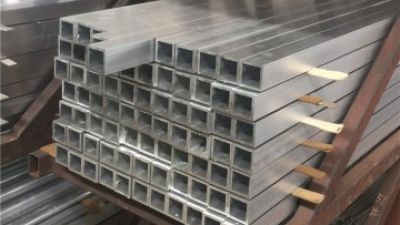
Against this background, 6063-T5 aluminum square and rectangular hollow tubes offer a practical solution for frame and structural fabrication. Produced through precision extrusion, these tubes provide consistent wall thickness, dependable rigidity, and low weight. Their natural silver brushed finish delivers a clean appearance without requiring a protective coating, while the alloy’s inherent corrosion resistance supports indoor and outdoor applications. Complete cross-sectional sizes and multiple wall thicknesses are available from stock, helping shorten procurement and production schedules.

The tubes can be custom cut and processed with CNC drilling, tapping, bending, and other secondary machining methods. They are also easy to weld, anodize, or powder coat when projects require enhanced surface protection or customized colors. Typical uses include equipment frames, architectural structures, machine guards, display systems, solar supports, and general fabrication assemblies where accurate dimensions, efficient handling, and long-term service performance are essential.

FAQS

Why do buyers choose Chinese suppliers for sliding door profiles?

Many factories combine extrusion, cutting, and surface treatment in one location. This can reduce coordination and shorten sample development. Customization is a major advantage. Profiles can suit homes, patios, and commercial partitions.

What details should buyers specify before requesting a quotation?

State the alloy, wall thickness, groove size, thermal-break width, and finish color. Include drainage channels, gasket grooves, roller clearances, and glass thickness. Clear drawings prevent avoidable misunderstandings. Small details matter.

Why are physical samples important before mass production?

A sample shows whether the profile fits rollers, tracks, seals, locks, and handles. Check corner joints, drainage, surface finish, and repeated opening cycles. Measure gaps under direct light. Catalog images are not enough.

Does a lower aluminum price always provide better value?

No. A lower price may indicate thinner walls, weak packaging, or uneven finishing. A heavier frame is not automatically stronger or more suitable. Poorly matched rollers can create noise and wear. Cheap can become expensive.

Which quality documents should global buyers request?

Request alloy details, mill certificates, wall-thickness readings, and batch inspection records. Ask for dimensional tolerance data and coating test results. Material traceability is also useful. Documents need verification.

How should buyers evaluate surface treatments?

Specify anodizing thickness or powder-coating performance in writing. Request documented salt-spray and adhesion results. Inspect scratches under bright, direct light. The test method should be clear.

What should buyers check about supplier communication and production capacity?

Ask whether engineers can provide accurate drawings, loading guidance, and installation details. Review production capacity, quality procedures, export experience, and response times. Discuss material shortages, port delays, and damaged-goods replacement. Vague promises deserve caution.

Can recycled aluminum support a more sustainable door project?

Recycled aluminum generally requires far less energy than primary aluminum. Buyers can request recycled-content declarations and production-energy information. However, traceability may be incomplete. Check current evidence carefully. Sustainability claims need proof.

Conclusion

Aluminum Profiles For Sliding Doors are essential structural components that provide strength, stability, smooth operation, and a clean modern appearance. This article explains the main profile types used in sliding door systems, including frame sections, track rails, meeting stiles, and reinforcement profiles. It also explores why many global buyers consider Chinese suppliers, such as their broad manufacturing capacity, flexible customization, competitive pricing, and ability to support different project requirements.

The guide presents practical methods for evaluating suppliers, including checking production capabilities, material quality, surface treatments, dimensional accuracy, testing procedures, and compliance with relevant international standards. It also highlights important customization options, packaging, delivery schedules, communication, warranty terms, and after-sales service. By comparing quotations beyond the initial unit price and assessing consistency, lead times, technical support, and long-term reliability, buyers can select a suitable supplier for durable, efficient, and professionally finished sliding door systems.

Evelyn

Evelyn

Evelyn is a dedicated marketing professional with a specialization in aluminum alloy profiles, honed through years of experience in the manufacturing sector. Since joining a prominent manufacturer of aluminum solutions in 2009, she has immersed herself in the intricacies of construction,......
Previous China Top Aluminum Pergola Profile Supplier Guide