Picking the best aluminum door profile supplier for 2026 isn't just about glancing at prices in a catalog. You really need some solid proof to back things up. The global market for aluminum is booming, thanks to mostly construction, renovations, better energy efficiency, and the push for lighter materials. According to Grand View Research, demand for aluminum doors and windows keeps climbing, fueled by urban growth and the need to replace old ones. And here's something cool: the International Aluminum Institute points out that recycling aluminum uses only about 5% of the energy needed to make new stuff from raw resources. That’s a pretty big deal because it links choosing suppliers not just to saving money but also to helping the environment.
A trustworthy aluminum door profile supplier should be able to show you verified alloy grades, precise measurements, coating details, and test reports. It’s worth asking if they meet standards like EN 755 and EN 12020. Don't just take their word for it—ask for samples. Take a close look at the corners, wall thickness, drainage channels, and how the thermal break connects—those tiny details matter. Small imperfections can become pretty noticeable when the door frame sits against uneven brickwork.
As Dr. Matthias Rehfeldt, an expert in aluminum extrusion, puts it, “Performance starts with the extrusion system, not just the surface finish.” Seems obvious, right? But it's true. Even if a coating looks great, it can't fix a weak frame or poor assembly.
The credibility of a supplier also depends on their experience in production, die-making capacity, logistics, and after-sales support. Big names like Hydro, Reynaers Aluminium, Schüco, and YKK AP each have their strengths worldwide. Still, just knowing the brand isn't a guaranteed sign they’re right for you. Some supplier websites still share vague test data—that’s a red flag.
This guide dives into the top suppliers for 2026, looking at their tech skills, certifications, ability to customize, delivery reliability, sustainability efforts, and the overall value they bring to your project. Keep in mind—things like your local climate, the skill of your installer, and the project size can shake up these rankings. So, it’s important to think everything through carefully.
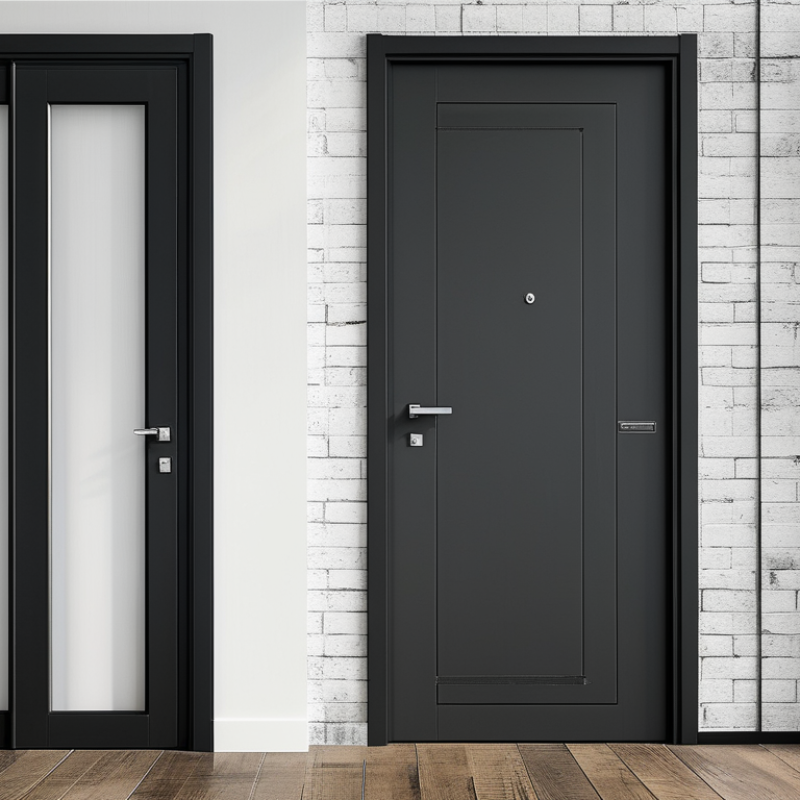
Define “Best” Through EN 12020, EN 755, and ISO 9001 Compliance
2026 Best Aluminium Door Profile Suppliers?
“Best” should mean measurable performance, not attractive brochures or fast replies. For aluminium door profiles, EN 12020 helps assess dimensional tolerances for precision extrusions. Check profile drawings against actual inspection reports, especially wall thickness, straightness, and twist. A small deviation can complicate corner joints, gaskets, and automated cutting.
EN 755 adds broader requirements for extruded aluminium products, including mechanical properties and dimensional control. Ask how each production batch is tested. Request alloy designations, temper records, surface-finish checks, and traceability from billet to packed profile. Numbers matter. A sample may look excellent under showroom lighting, yet fail after machining or repeated door movement. That gap matters.
ISO 9001 shows that a supplier operates a quality management system, but certification alone proves little about daily execution. Review corrective-action records, calibration dates, incoming-material controls, and procedures for handling nonconforming profiles. A reliable supplier should explain these details without hiding behind technical language. Ask for recent documents, not generic templates. Supplier audits can reveal whether operators measure profiles during production or only before shipment. This is where procurement decisions become less comfortable. Perfect compliance claims deserve careful questions. Some buyers also overlook packaging damage, although bent profiles can distort installation results. Allow room for improvement, and record every agreed tolerance in the purchase contract.
2026 Best Aluminium Door Profile Suppliers? Define “Best” Through EN 12020, EN 755, and ISO 9001 Compliance
This standards-based evaluation model gives equal importance to dimensional accuracy, mechanical-property verification, and quality-management controls. EN 12020 addresses tolerances for precision aluminium extrusion profiles, EN 755 covers technical conditions and mechanical properties for extruded aluminium products, and ISO 9001 defines quality-management-system requirements. The percentages are evaluation weights, not supplier rankings or certification claims.
Compare Thermal Break Systems Using EN 14024 and Whole-Door U-Values
Choosing the 2026 best Aluminium Door Frame Profile supplier requires more than comparing catalogued Uf values. EN 14024 evaluates thermal barriers, including mechanical strength, durability, and adhesion. It does not certify the complete door’s thermal performance. A supplier should provide test evidence for the assembled system, not only a laboratory profile figure.
Whole-door performance is normally assessed through EN ISO 10077-1 and EN ISO 10077-2. These methods consider the frame, leaf, glass, spacers, seals, and thermal bridges. The result is the Ud or Uw value, measured in W/m²K. A profile with Uf 1.6 may still produce a weak whole-door result after hardware and installation are included. The International Energy Agency reported that buildings consumed about 30% of global final energy in 2022. Small thermal losses can become expensive across thousands of entrances. Passive House Institute criteria also show why high-performance doors often target around 0.8 W/m²K, depending on climate and certification scope.
Tips: Ask for EN 14024 documents, whole-door test reports, and installation details. Check the tested dimensions. Bigger doors can perform differently. Request corner, threshold, gasket, and hardware data. I have seen impressive profile claims fail at the threshold. That detail is easy to overlook. Supplier quality also depends on production control, traceability, and technical support. A reliable Aluminium Door Frame Profile partner should explain uncertainties, not hide them.
Verify Alloy Quality Through 6063-T5/T6 Certification and Traceability
The 2026 best aluminium door profile supplier is not chosen by price alone. Alloy evidence matters more. The International Aluminium Institute reported approximately 70.6 million tonnes of primary aluminium production in 2023. Such volume increases supply options, but it also makes material verification essential.
Request a mill certificate for every production batch. It should identify alloy 6063, temper T5 or T6, chemical composition, mechanical results, heat number, and inspection date. ASTM B221 defines T5 as artificially aged after cooling from an elevated-temperature process. T6 requires solution heat treatment and artificial aging. These tempers are not interchangeable. Typical 6063-T5 profiles specify about 140 MPa tensile strength, while T6 commonly reaches about 205 MPa, depending on the product standard and section.
Traceability must continue beyond paperwork. Match the certificate’s heat number with billet records, extrusion logs, and bundle labels. Verify magnesium and silicon levels against the Aluminum Association’s Teal Sheets and the applicable EN 755-2 or ASTM requirements. Ask for independent testing when doors face coastal humidity, heavy traffic, or large glass loads. Check hardness at several points, not one convenient location. Small details expose weak controls.
A certificate can still be wrong.
That is the uncomfortable part. Digital copies deserve skepticism. Suppliers should provide controlled records, laboratory accreditation details, and samples from the actual shipment. One overlooked temper mark can change performance, finishing behavior, and service life.
Assess Powder-Coating Durability Under AAMA 2603, 2604, and 2605
When comparing 2026 aluminium door profile suppliers, inspect powder-coating evidence, not only catalogue images. An Aluminium Glass Door Profile may look flawless indoors, yet fail beside a coastal entrance. AAMA 2603 generally suits interior or mild exposure, with basic color and gloss requirements. AAMA 2604 demands stronger weathering, adhesion, and corrosion resistance. AAMA 2605 sets the highest performance level for severe sunlight and outdoor conditions. Ask suppliers which standard covers the complete coating system, including pretreatment and finish thickness.
Request recent independent test reports, batch records, and coating thickness measurements. Check whether testing includes humidity, salt spray, accelerated weathering, color change, and gloss retention. A reliable supplier should explain alloy preparation, rinsing stages, curing temperature, and inspection frequency. Look closely at corners, drainage slots, and screw channels. Thin coverage often appears there first. Real installation experience matters. Ask for references from doors exposed to similar heat, rain, or salt air. Paperwork can be incomplete. That is worth questioning.
Tips:
Keep an uninstalled coated sample for comparison after six and twelve months. Record its color, gloss, and surface condition under the same light. Confirm the warranty excludes vague conditions only after clarification. For high-exposure projects, AAMA 2605 may cost more, but replacing faded profiles costs far more. Still, do not assume the highest rating guarantees perfect performance. Poor cleaning, trapped moisture, or damaged edges can shorten service life. A small sample test may reveal more than a polished sales presentation.
Measure Carbon Performance Against IAI Benchmarks: 16.1 vs 0.5 t CO₂/t
When selecting the 2026 best aluminium door profile suppliers, carbon data deserves close attention. The International Aluminium Institute benchmarks 16.1 t CO₂/t for primary aluminium and about 0.5 t CO₂/t for recycled aluminium. These figures show how strongly material origin affects a door’s footprint.
Ask suppliers for product-specific environmental data, not broad marketing claims. A Folding Door Aluminium Profile should include aluminium grade, recycled content, electricity source, and manufacturing location. Check whether reported emissions cover mining, smelting, casting, extrusion, and finishing. Missing stages can make a low number look better than reality.
Look closely.
On a factory visit, reviewers can inspect billet storage, powder-coating lines, and scrap collection. A supplier should explain how offcuts return to production without reducing alloy quality. Request an independently verified EPD and compare its system boundaries with the IAI benchmarks. Transport and thermal-break materials also deserve attention, especially for large folding panels.
The comparison is not always clean. A profile with 70% recycled content may still perform poorly if electricity use is high or scrap recovery is weak. I have seen carbon spreadsheets omit surface treatment. That gap matters. Buyers should record assumptions, request updated evidence, and challenge figures that seem unusually perfect. A credible supplier welcomes those questions and connects carbon performance with durability, testing, and documented production controls.
Custom Aluminum Profiles for Frameless Curtain Walls: Design, Performance, and Applications
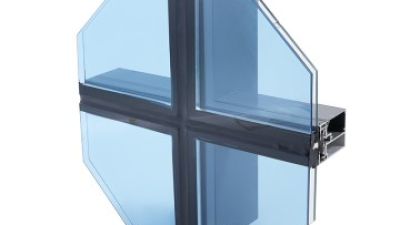
Custom aluminum profiles are central to frameless curtain walls, where structural precision must support a minimal visual language. Tolerances are typically controlled within ±0.1 mm to maintain accurate alignment, flush glazing, and consistent sightlines across large elevations. High-strength structural silicone bonds the glass panels to concealed aluminum supports, removing exposed mechanical fasteners and creating a cleaner façade. Joint widths are generally limited to 6–12 mm, allowing installers to preserve weather resistance while maintaining an almost invisible transition between the glass and supporting framework. Dark or neutral profile finishes can also create a subtle “shadow line,” blending with glass reflections and reducing visual contrast.
Surface protection is equally important for projects exposed to moisture, sunlight, and temperature changes. Anodizing or PVDF coating helps improve corrosion resistance, UV stability, and long-term color consistency, while finishes can be selected to complement the glass tint. According to the International Energy Agency’s *Buildings 2024* analysis, buildings account for approximately 30% of global final energy consumption and 26% of energy-related emissions, reinforcing the importance of well-designed façade systems that support daylighting and controlled solar performance. The International Aluminium Institute also reports that recycled aluminum requires roughly 5% of the energy used for primary production, making durable, recyclable profiles suitable for high-rise offices, atriums, retail façades, airports, and other applications where appearance and lifecycle performance must work together.
Conclusion
Choosing the 2026 best Aluminium Door Profile supplier requires more than comparing prices or product images. A reliable evaluation should begin with compliance: EN 12020 and EN 755 for dimensional accuracy and material performance, supported by a documented ISO 9001 quality system. Thermal-break solutions should be assessed through EN 14024 and complete-door U-values, since profile performance alone may not reflect real energy efficiency. Buyers should also verify 6063-T5 or 6063-T6 alloy certificates, production traceability, and consistent inspection records.
Coating quality is another key factor. Testing against AAMA 2603, 2604, or 2605 can indicate different levels of durability, weather resistance, and finish performance. Sustainability should be measured with clear carbon data, using IAI benchmarks such as 16.1 versus 0.5 t CO₂ per tonne of aluminium as useful reference points. Finally, suppliers should be ranked by production capacity, minimum order quantity, lead time, warranty terms, and the quality of their test evidence. This approach supports a balanced, transparent purchasing decision.

 Contact WhatsApp
 Contact Phone
 Contact Email
 Wechat+8618029386470
 Whatsapp