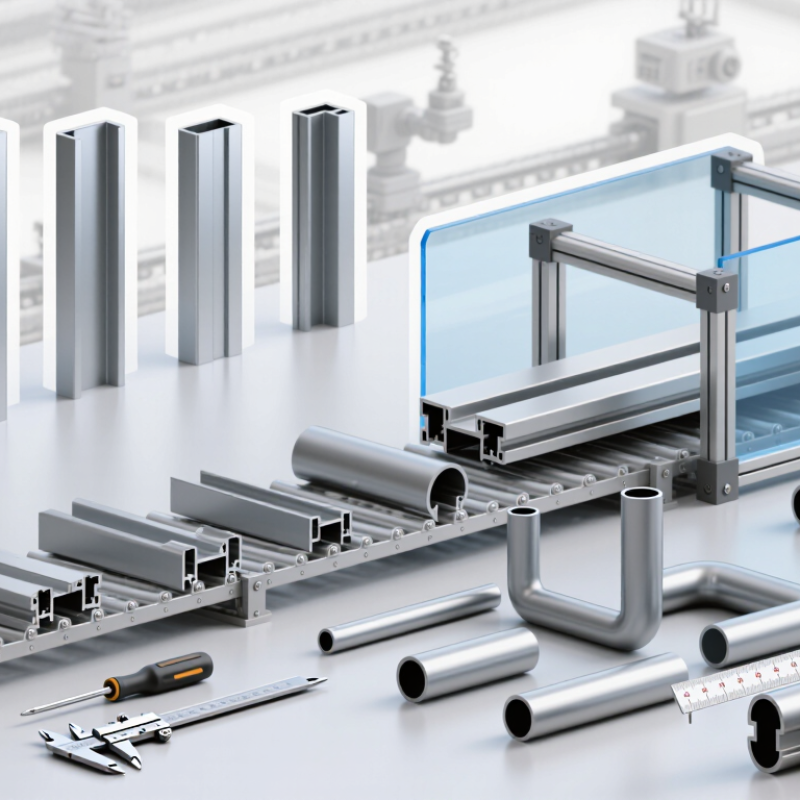
Picking the right Industrial Aluminum Profiles isn’t just about choosing something that looks clean and neat. It’s a decision that really influences the load capacity, how quickly you can get things assembled, resistance to corrosion, maintenance needs, and overall project costs. For example, the profile supporting a conveyor might need thicker walls than one used just for a machine guard. Little details count here — things like slot size, corner radius, how easy it is to access fasteners, and the finish after anodizing all matter more than you might think.
Industry data actually backs up taking a careful approach. According to the International Aluminium Institute, recycled aluminum only uses about 5% of the energy needed to produce new, primary aluminum. Their report on Greenhouse Gas Pathways also points out recycling as a key way to cut emissions. Plus, a study by the Aluminum Association for 2024 estimates that aluminum supports around 692,000 jobs and contributes roughly $176 billion to North America’s economy. These numbers really highlight why choosing your material isn’t just about the initial price — it’s about considering the whole lifecycle. A cheaper profile might end up creating costly problems down the road.
Charles M. Johnson, who’s the President and CEO of The Aluminum Association, once said, “Aluminum is infinitely recyclable.” That’s a pretty awesome principle to keep in mind. But honestly, it shouldn’t replace solid engineering judgment. For instance, alloy choices like 6063 are popular for architectural frames and visible surfaces, while 6061 might offer a bit more strength for structural parts. Still, picking an alloy isn’t the whole story. Designers need to check things like span, deflection, joint strength, vibration, and how it’ll hold up in different environments. Asking for mill certificates and verifying dimensional tolerances really helps make sure everything’s reliable. And it’s equally important to review the supplier’s accuracy when cutting and their overall quality controls. No matter what, there’s no foolproof guide — real projects often have imperfect drawings, changing loads, or tight deadlines. A practical approach means leaving space for some testing, correction, and honest reevaluation along the way.
How to Choose Industrial Aluminum Profiles for Projects? Start by defining the job, not the catalogue shape. Record span, supported load, allowable deflection, joint locations, and access for installation. An Aluminum Industrial Profile for a machine guard differs from one carrying a conveyor frame. Write the load cases down. Do not trust a visual match.
Operating conditions can change the selection quickly. Measure temperature, humidity, vibration, cleaning chemicals, dust, and salt exposure. Aluminum expands about 23.5 micrometres per metre per degree Celsius. A three-metre rail may move several millimetres across a 60°C change. Leave controlled clearance around covers and sliding joints. For coastal sites, consider suitable alloy, surface treatment, drainage, and isolated fasteners. Trapped water causes trouble. For food or pharmaceutical areas, confirm cleanability and applicable hygiene requirements before detailing channels or crevices.
Use traceable technical evidence. The U.S. Geological Survey’s Mineral Commodity Summaries 2024 reports approximately 70 million metric tons of global aluminum production in 2023. The International Aluminium Institute’s 2023 production dataset reports a similar scale, showing why alloy and supply verification matter. Request tensile data, temper designation, dimensional tolerances, and corrosion information for the actual batch. EN 755-9 can support extrusion tolerance checks, while structural calculations should follow the project’s governing design standard. I have seen lightweight frames fail because vibration was treated as a minor detail. That assumption needs challenging. A profile may look rigid, yet its connection can govern the entire assembly.
Choosing an Industrial Aluminium Profile starts with the alloy, not the catalogue shape. Alloy 6063-T5 suits frames, guards, and visible rails because it extrudes smoothly and accepts anodizing well. Alloy 6061-T6 offers higher strength for machine bases, brackets, and loaded supports. ASTM B221 lists typical minimum tensile strengths of 186 MPa for 6063-T5 and 241 MPa for 6061-T6, depending on section thickness.
Temper changes performance significantly. T5 means the profile is artificially aged after cooling from extrusion. T6 receives solution heat treatment and artificial aging. The Aluminum Association’s Aluminum Standards and Data shows that 6061-T6 commonly reaches a minimum yield strength near 214 MPa, while 6063-T5 is near 145 MPa. That difference matters under vibration. It also affects drilling, tapping, and deformation around fasteners. Stronger is not always better.
Check the actual load path. A 6063-T5 frame may work for a light enclosure, but a cantilevered conveyor support could require 6061-T6 or 6082-T6. Ask for mill certificates and verify the temper against the design standard. In practice, engineers sometimes choose T6 without checking extrusion complexity or surface requirements. I have seen that decision create unnecessary machining and weaker corner joints. Reconsider it. The profile’s wall thickness, span, connection method, and corrosion exposure still need testing against project conditions, not only datasheet values.
How to Choose Industrial Aluminum Profiles for Projects?
Choosing industrial aluminum profiles starts with the load, span, and working environment. Profile shape directly affects stability and assembly. Square profiles suit machine frames and guarded enclosures. Rectangular profiles often perform better as long beams. T-slot profiles allow adjustable connections, but their slots can reduce effective strength. Measure twice.
Dimensions are not limited to width and height. Wall thickness, cross-sectional area, and moment of inertia influence stiffness. A long profile with thin walls may look substantial but still deflect under a moderate load. Calculate bending, compression, and shear separately. Include the weight of equipment, moving parts, and unexpected vibration. Recognized structural formulas and verified technical data improve reliability. A practical mistake is using the maximum listed capacity without checking support spacing. Capacity values often assume ideal conditions.
Connection details deserve equal attention. Fasteners, corner joints, drilled holes, and end supports can control the actual load capacity. A 1,200-millimeter beam may need a larger section or an additional support if visible sag is unacceptable. Environmental conditions also matter. Moisture, temperature changes, and chemical exposure may affect surface protection and joint performance. Numbers can mislead. Build a small prototype when the structure carries valuable equipment or repeated motion. I once trusted a clean calculation and overlooked joint movement. That experience changed my review process. Do not hide uncertainty. Record assumptions, inspect every connection, and revise the profile choice when real testing disagrees with the calculation.
When selecting industrial aluminum profiles, surface finish is not decoration. It affects corrosion resistance, cleaning effort, and dimensional appearance. For Aluminum Profiles 4040, inspect the operating environment before choosing anodizing or powder coating. Coastal air, cutting fluids, humidity, and trapped water can attack exposed surfaces. ISO 12944 classifies atmospheric corrosivity from low indoor exposure to extreme marine conditions. That classification offers a useful starting point. Not the final answer.
Anodizing forms a hard oxide layer and keeps the aluminum’s metallic character visible. Specify coating thickness, sealing quality, and color tolerance under ISO 7599. Powder coating creates a thicker barrier, but damaged edges can expose the substrate. Drainage matters. A small water pocket behind a bracket may cause more trouble than a visible scratch. Salt-spray hours alone can mislead engineers because laboratory cycles rarely reproduce every site condition. I have seen clean-looking profiles fail around unsealed cuts.
Environmental protection also includes the end of service. The International Aluminium Institute reports that recycled aluminum requires about 5% of the energy used for primary aluminum, representing roughly 95% energy savings. Select finishes and assemblies that support future separation. Avoid unnecessary adhesives, mixed inserts, and concealed contamination. The choice is not always perfect. A brighter finish may demand more cleaning, while a thicker coating can complicate recycling. Review maintenance records, local climate data, and coating test evidence before approving the specification.
| Surface Finish | Typical Appearance | Common Thickness or Treatment Range | Corrosion Protection | UV and Weather Resistance | Scratch and Wear Resistance | Recommended Environment | Key Selection Considerations |
|---|---|---|---|---|---|---|---|
| Mill Finish | Natural aluminum appearance with visible extrusion lines and possible color variation | No additional surface coating; oxide film is naturally formed and typically very thin | Low to Moderate | Limited | Moderate | Dry indoor areas, protected machine interiors, temporary structures, and parts that will be coated later | Most economical option, but it is less suitable for moisture, salt, chemicals, and highly visible architectural surfaces |
| Clear Anodized | Metallic silver appearance with a transparent protective layer | Common anodic film thickness: approximately 10–25 micrometres, depending on the exposure class | High | High | High | General outdoor use, equipment frames, façades, transport structures, and industrial areas with normal humidity | Provides durable protection without hiding the aluminum texture; sealing quality and cleaning practices affect service life |
| Colored Anodized | Metallic bronze, black, champagne, or other anodized colors with a satin or brushed effect | Common anodic film thickness: approximately 10–25 micrometres | High | High | High | Outdoor architectural applications, solar equipment frames, display systems, and exposed industrial installations | Color consistency depends on alloy, batch control, brushing direction, and anodizing conditions; avoid strong alkaline cleaners |
| Powder Coating | Uniform matte, satin, or gloss finish available in a broad range of colors | Typical cured coating thickness: approximately 60–120 micrometres; exterior-grade systems may use thicker specifications | High | High | Moderate to High | Outdoor equipment, building components, machine guards, public infrastructure, and humid environments | Offers strong color flexibility and good barrier protection; pretreatment, edge coverage, curing, and impact damage are critical |
| PVDF Coating | High-quality architectural finish with smooth, consistent color and gloss control | Typical total dry-film thickness: approximately 25–35 micrometres for many architectural systems | Very High | Very High | Moderate to High | High-exposure façades, coastal buildings, strong sunlight, industrial atmospheres, and long-life exterior projects | Excellent resistance to weathering and color fading; generally costs more and requires controlled application procedures |
| Electrophoretic Coating | Smooth, transparent or lightly tinted protective appearance, often used over anodized aluminum | Typical clear or tinted coating thickness: approximately 10–25 micrometres, subject to the system specification | High | High | Moderate to High | Exterior architectural components where enhanced stain resistance and color retention are required | Can improve resistance to pollutants and handling marks; coating compatibility and repair procedures should be confirmed before selection |
| Brushed or Mechanical Finish | Directional satin texture that can reduce the visibility of minor handling marks | Mechanical treatment only, commonly combined with anodizing or a clear protective coating | Depends on Topcoat | Depends on Topcoat | Moderate | Indoor equipment, decorative machine frames, retail fixtures, and protected architectural details | Texture direction must be controlled during fabrication; the mechanical finish alone is not a substitute for corrosion protection |
| Marine or Coastal Specification | Usually anodized or high-performance coated aluminum with enhanced process controls | Often specified with thicker anodic films or multi-stage coating systems; exact values must follow the project standard | Very High | Very High | Moderate to High | Salt spray, coastal exposure, marine infrastructure, wastewater facilities, and locations with persistent condensation | Specify alloy compatibility, pretreatment, drainage, fastener isolation, cut-edge protection, and routine salt removal |
Note: Performance ratings are general engineering guidance. Actual service life depends on aluminum alloy, coating quality, film thickness, pretreatment, installation design, pollutant level, humidity, salt exposure, cleaning frequency, and mechanical damage.
Choosing an industrial aluminum profile starts with the connection, not only the section size. A strong frame can still fail when joints loosen or accessories do not fit. In project work, I check the profile groove, wall thickness, and joint type together. Corner brackets suit many light structures. Internal connectors provide a cleaner appearance but need accurate cutting and drilling.
Fasteners should match the expected load, vibration, and working environment. Stainless steel hardware can help in damp areas, while standard plated fasteners may suit dry indoor equipment. Use washers where contact pressure could damage the profile. Check thread engagement carefully. Too little engagement weakens the joint. Too much can interfere with internal channels. Small details matter.
Assembly method also affects reliability. A bolted frame is easier to adjust and repair. A permanent connection may save space, but it can complicate future changes. Before full assembly, I recommend a dry fit on a flat workbench. Check squareness with a diagonal measurement, then inspect cable paths, doors, and service access. Measure twice. Cut once.
Do not rely on appearance alone. Review load calculations, supplier tolerances, fastener specifications, and safety requirements. A profile listed as compatible may still need a different connector or machining step. I have seen projects lose time because one accessory was overlooked. The first layout is rarely perfect. Leave room for revision.
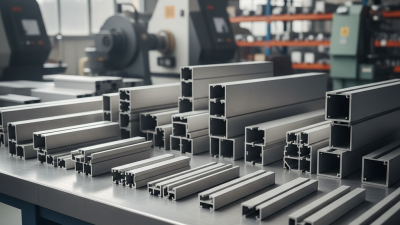
When selecting Aluminum Extruded Profiles, compare suppliers beyond their quoted price. Review extrusion capacity, alloy control, tooling experience, and quality inspection methods. Ask for production samples with measured dimensions. Request inspection reports, material certificates, and batch traceability records. These documents show whether a supplier can repeat results consistently.
Standards should match the project’s environment and load requirements. Confirm the alloy, temper, dimensional tolerances, and surface treatment before ordering. Common choices include 6063 for clean architectural finishes and 6061 for higher structural strength. However, the correct choice depends on design calculations. A polished sample can hide weak process control. Check tolerances at several points, not only at the center.
Compare total cost, not only the price per meter. Include die charges, minimum order quantities, cutting, machining, packaging, testing, and import-related expenses. Delivery requirements need equal attention. Confirm sample approval dates, production capacity, lead time, shipping method, and packaging details. Long profiles may arrive scratched without corner protection or strong wooden supports. Build a small schedule buffer. Delays happen, even with experienced suppliers. Recheck every assumption before releasing the purchase order.
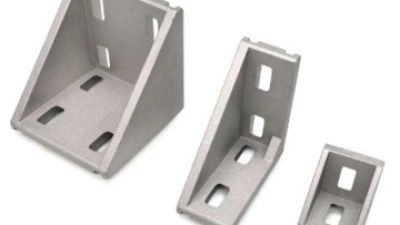
Die-cast aluminum angle brackets provide strong, precise connections for industrial extrusion profiles, making them suitable for building rigid 90-degree frames. Molded from high-tensile aluminum alloy, these heavy-duty brackets feature a matte natural finish that offers a clean, functional appearance while supporting demanding assembly environments. Their solid construction helps maintain accurate alignment between connected profiles.
Available in multiple sizes for 2020, 3030, 4040, and 4545 series profiles, the brackets accommodate a wide range of structural designs. Slotted mounting holes allow installers to fine-tune the bracket position before tightening, making it easier to correct alignment and achieve consistent frame geometry. A thick triangular reinforcing rib adds strength to the corner, improving load capacity and reducing movement caused by vibration.
Installation requires no welding or specialized fabrication. The brackets work with standard T-bolts and flange nuts, enabling quick assembly, adjustment, and maintenance. They are well suited for heavy-load equipment frames, industrial workstations, machine supports, protective enclosures, and safety guard fences where dependable extrusion profile connections are required. Their reinforced design helps create stable structures while preserving the flexibility of modular aluminum framing systems.
Alloy 6063-T5 suits frames, guards, and visible rails. It extrudes smoothly and accepts anodizing well. Appearance matters here.
Alloy 6061-T6 suits machine bases, brackets, and loaded supports. It offers higher strength under vibration and heavier loads. Stronger is not always better.
Yes. Review wall thickness, span, connection method, and load path together. A thin wall may deform near fasteners, even with a strong alloy.
T5 and T6 provide different strength levels and machining behavior. Verify the temper using mill certificates and project requirements. Datasheets are not enough.
Inspect humidity, coastal air, cutting fluids, and trapped water. Anodizing preserves a metallic appearance, while powder coating creates a thicker barrier. Drainage still matters.
Not always. Unsealed cuts can expose the aluminum and collect moisture. A small water pocket behind a bracket may cause corrosion. Seal vulnerable areas.
Check groove size, wall thickness, joint type, vibration, and moisture exposure. Use washers where contact pressure may damage the profile. Thread engagement needs careful measurement.
A bolted frame is easier to adjust, repair, and reuse. Permanent connections may save space but restrict future changes. I would leave room for revision.
Perform a dry fit on a flat workbench. Measure both diagonals and inspect cable paths, doors, and service access. Measure twice. Cut once.
Review load calculations, supplier tolerances, fastener specifications, climate data, and coating evidence. Also consider future separation and recycling. The first layout is rarely perfect.
Choosing the right Industrial Aluminum Profiles is essential for creating safe, durable, and cost-effective project solutions. Start by defining the project’s purpose, working environment, temperature range, moisture exposure, and expected service life. These conditions will guide the selection of a suitable aluminum alloy and temper, ensuring the material provides the required balance of strength, weight, corrosion resistance, and machinability. Next, determine the profile shape and dimensions according to load capacity, span, deflection limits, and available installation space.
Surface finish should also match the operating environment, with appropriate protection for indoor, outdoor, humid, or chemically exposed applications. Consider how profiles will be connected and assembled, including fasteners, brackets, joints, and adjustment components, so installation remains efficient and reliable. Finally, compare suppliers based on quality consistency, applicable standards, technical support, customization capabilities, total cost, minimum order quantities, and delivery schedules. A complete evaluation helps ensure the selected profiles meet both performance expectations and project budget requirements.