




Modular, high-precision aluminum framing systems emerge as the structural backbone of Industry 4.0 across automotive and logistics sectors
Two industry giants, operating at opposite ends of the industrial spectrum, are demonstrating why extruded aluminum framing has moved from an option to a strategic imperative.
Inside Tesla‘s gigafactories, the mantra is Elon Musk’s philosophy of building “the machine that builds the machine.” The reality of that vision demands structural systems capable of sustaining extreme precision under continuous dynamic loads.
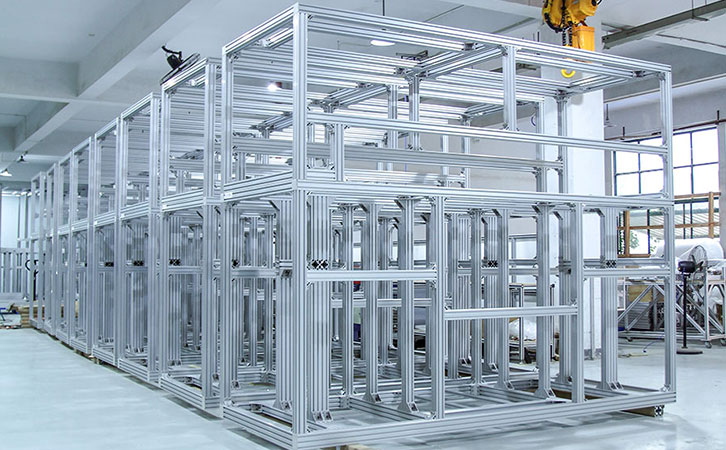
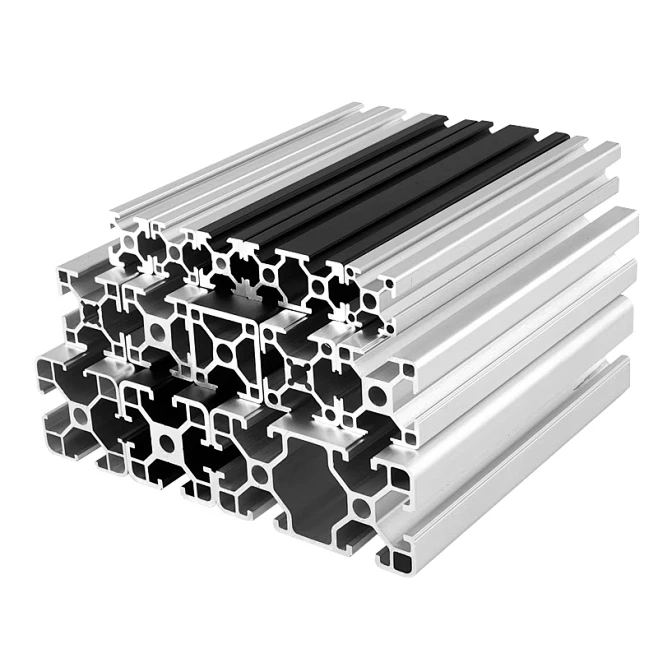
Tesla‘s 4680 battery cell production lines employ linear conveyor systems requiring 12-micron (±0.012 mm) repeatability for precise prismatic cell placement—a level of accuracy traditionally reserved for high-end machining centers, now demanded from everyday production infrastructure. To achieve this while maintaining the flexibility to reconfigure lines as vehicle designs evolve, Tesla has extensively deployed aluminum profile framing systems.
The requirements are stringent:Beyond the battery lines, Tesla has deployed aluminum profile structures for safety guarding around robotic work cells, mobile workstations supporting assembly tasks, and modular frames for automated guided vehicle (AGV) charging stations and material handling systems. The result is a manufacturing environment that can adapt as Tesla introduces its “Unboxed” assembly method for vehicles like the Cybercab, with Musk targeting sub-10-second cycle times by 2026—an ambition made possible only by infrastructure designed for rapid reconfiguration.
Half a world away, inside JD.com‘s network of “Asia No.1” intelligent logistics parks, aluminum extrusion profiles serve an equally demanding but entirely different role. These facilities, which handles 360,000 parcels daily during peak periods, depend on miles of automated conveyor systems operating around the clock.
For such high-throughput logistics applications, aluminum profile selection is mission-critical:Across both applications, common technical requirements emerge for aluminum extrusion profiles intended for automated production line use:
Precision tolerances: ±0.1 mm dimensional accuracy as a baseline; ±0.05 mm for high-end applications involving vision-guided robotics.
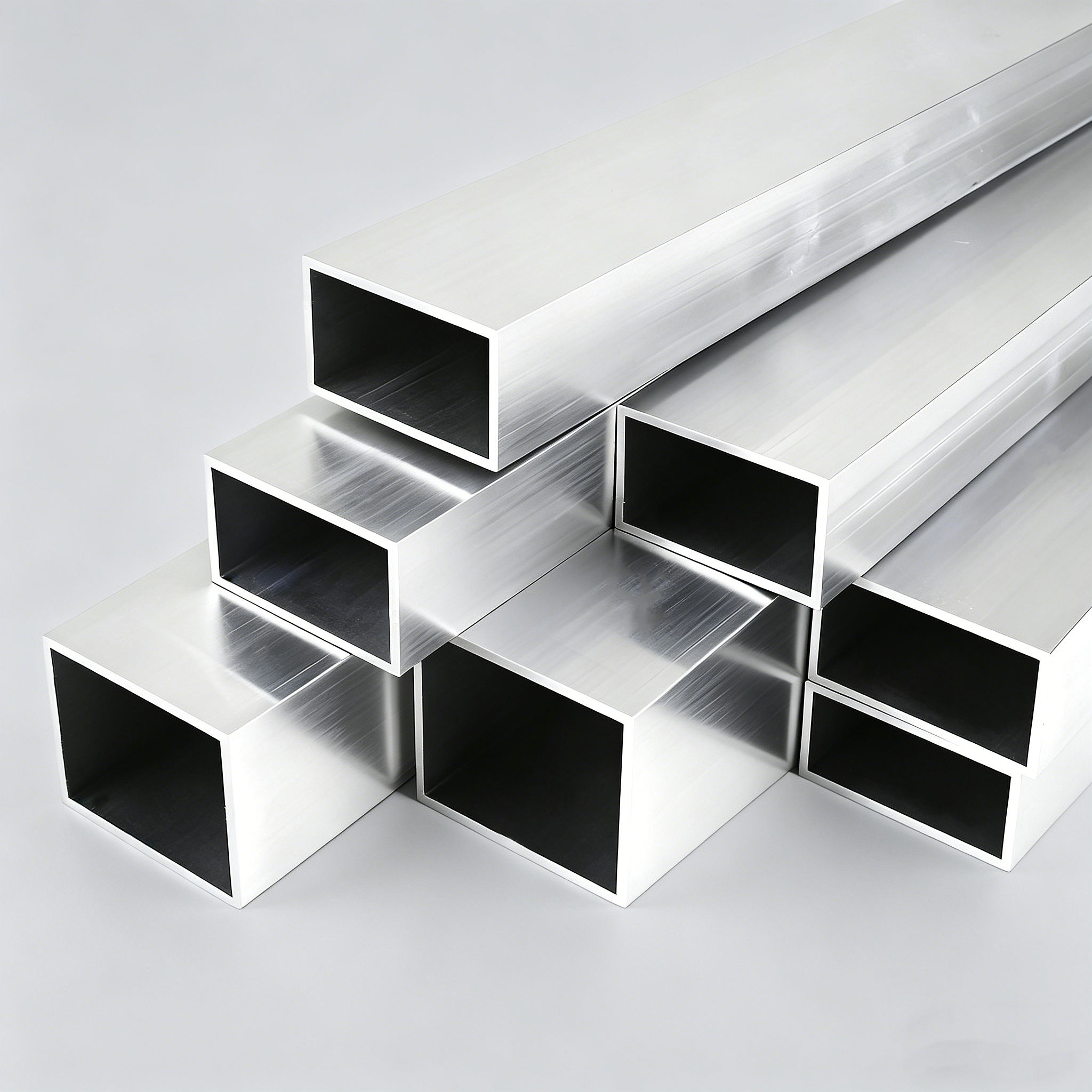
Alloy selection: 6063-T5 for standard framing; 6061-T6 for heavy-load and high-rigidity applications.
Surface treatment: Anodized finish (≥10μm thickness) provides wear resistance and ESD-safe properties.
Modular compatibility: Full compliance with T-slot dimensional standards to enable integration with industry-standard connectors.
Conformance standards: Compliance with GB/T 6892-2023 ensures material consistency and mechanical property verification.
As we move through 2026, the aluminum extrusion industry is responding to these demanding applications with significant innovations. AI-powered surface inspection systems are now capable of real-time defect detection on extrusion lines, while manufacturers are increasingly adopting automated stacking systems that reduce surface damage by more than 90 percent while achieving 3-5x faster handling cycles.
At Aoli aluminum, we do not simply observe these industry trends—we actively enable them. Drawing on deep engineering expertise and state-of-the-art extrusion, precision machining, and surface treatment capabilities, we are fully equipped to manufacture aluminum profile systems that meet the most demanding specifications required by Tesla, JD.com, and other Industry 4.0 pioneers.
Contact us today to discuss how our aluminum extrusion solutions can power your next‑generation production line.